 Campus Echo Staff
N.C. Central University’s dance program has been out of its home studio in Walker Complex since Fall 2024.
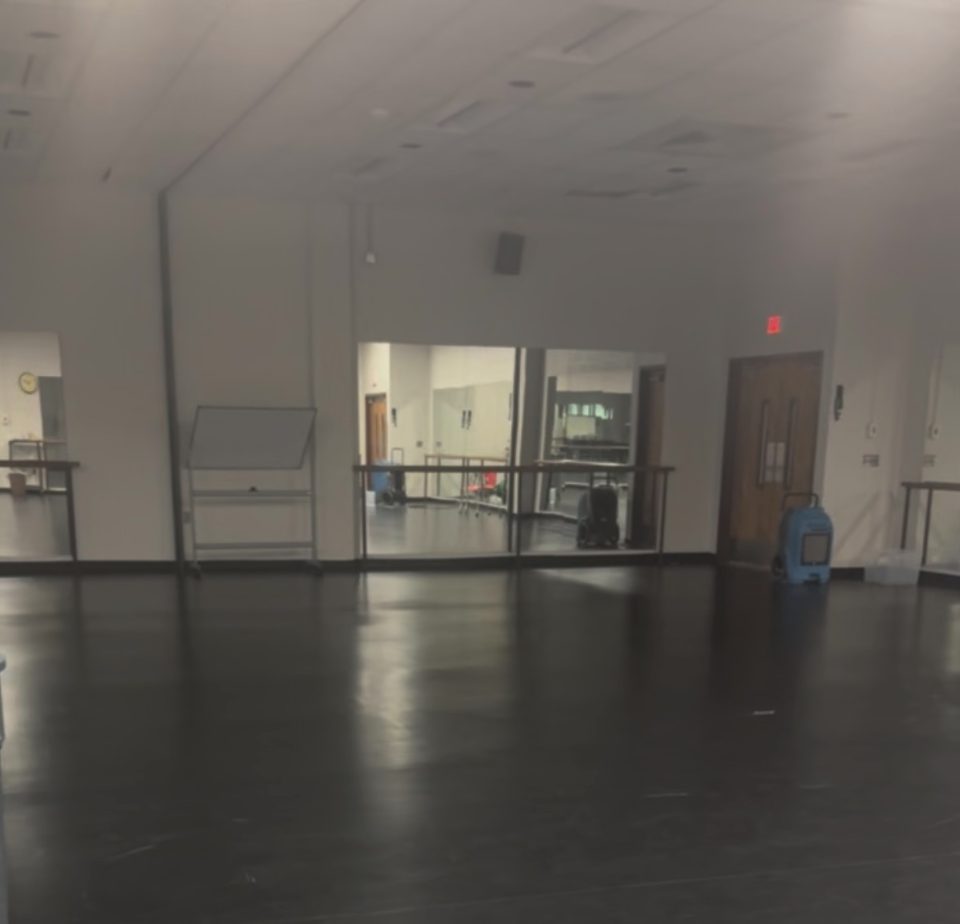
The studio is home to the NCCU Dance Repertory Company, the pre-professional dance company on campus, and the NCCU dance program. The company conducts rehearsals, residencies with guest choreographers and technique classes in the space.
The NCCU dance program studio is used by students for creative work and career preparation, however the removal was caused by a failing HVAC system.
The studio contains visible mold and has become a non-functional creative space and students have been forced to practice in temporary spaces around campus.
Faith Johnson, a senior dance education student, described the effect on her training.
“The mold issue has affected me tremendously, just with classes and not having a stable and secure area to learn within my body,” Johnson said. “I have had to do more research-based learning and experimenting with certain aspects of dance rather than being able to have those things.”
Chassidy Long, a Junior taking Jazz 1 and Pilates as electives, also described the impact the issue has on her.
“I feel that the mold in the dance room affects me as an upcoming dancer because I don’t get to utilize the proper equipment to fully help me with my training and grow as a dancer,” Long said.
Kristi Johnson, director of dance at NCCU, said the program’s needs are not easily met elsewhere.
“We have a specialized room with a large amount of space,” Johnson said. “This space accommodates the dances we create for our concert every year, so it is not easy to relocate us to any classroom.”
Johnson said the mold issue has affected the repertory company.
“It is difficult when you’re bringing in guest artists or bringing in people to work with the company,” Johnson said. “You may not be in the right space, have proper flooring, or a proper sound system. Dancers have to be in a dance studio, so I have been hesitant about whom to bring in. We have to be resourceful.”
Maurice Baldwin, the building manager for the Walker Complex, says the mold issue came from the room not being used during the summer.
“The air is kinda stale because it’s not getting what we call return,’” he said.
Baldwin added that the permanent fix, a brand new HVAC system, is scheduled to begin in February 2027.
The university is currently using a temporary chiller rented from the state behind the building while it waits for the permanent fix. According to Baldwin, the temporary chiller costs about $30,000 a month.
“We are trying to get away from that because it is costing the university a lot of money,” Baldwin said.
Written by Lyric Sanders.