The 2016 aesthetic is not the only thing making a comeback in 2026. More young people are pulling out iPods, CD players and rebuilding vinyl collections. Gen Z is beginning to break up with subscription culture.
What started as a nostalgic trend has turned into something deeper: a desire to take control of personal media again.
Streaming services were created for convenience, but many users now see them as unreliable. Songs and movies can disappear overnight because of licensing changes or company decisions.
Even though customers pay monthly, they do not actually own what they listen to or watch. That lack of ownership has pushed some students back toward physical media.
“With streaming, you’re depending on an app to decide what you can and can’t listen to,” Robert Mallory, senior interdisciplinary studies student, said.
He said certain artists’ music has become unavailable on platforms, including Salt-N-Pepa and Al B. Sure.
He shared that he felt streaming services cannot be trusted to preserve full catalogs. Physical media, he added, provides stability that digital platforms cannot guarantee.
Mallory said he feels physical media is safer because it guarantees access over time and that his family’s movie collection helped shape how he views ownership.
“My parents still have their original VHS tapes of movies like Soul Food,” he said.
On a recent thrifting trip, Mallory found a 1990s copy of Thriller at McKay’s Buy Sell Trade in Mebane, North Carolina. He described it as one of his best finds so far.
He said collections represent memory and permanence rather than temporary access.
For some students, collecting physical media is also about self-expression.
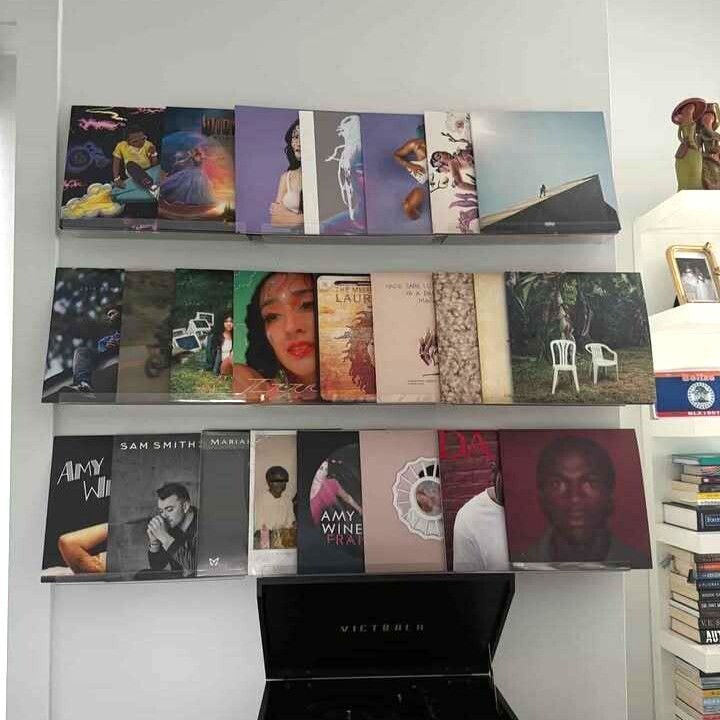
Alana Hughley, junior business administration student, said album artwork played a major role in her decision to begin collecting.
She said displaying records makes her room feel more personal.
“What sparked my interest in collecting physical media is because I saw all the beautiful covers of my favorite songs,” Hughley said. “And I wanted to collect them to display in my room.”
Ownership matters just as much as appearance for Hughley.
She said she feels streaming services are unreliable because content can be removed at any time, but physical collections provide assurance that the music will remain accessible.
“I prefer physical media because it won’t disappear off the internet,” Hughley said.
She shared that her most meaningful purchase so far is Currents by Tame Impala.
She described the album as emotionally impactful and visually appealing and said the sound quality also makes vinyl preferable to digital streaming.
“It’s a beautiful album through and through, 10 out of 10, and it changed my life,” Hughley said.
For many college students, physical media can also make financial sense. Subscription fees often pile up quickly as users sign up for multiple platforms.
Buying a CD or record once can be cheaper over time than paying monthly for years. Physical collections also give listeners control over what stays available.
Hughley said vinyl offers an experience that streaming cannot.
“I prefer vinyl records because it sounds better to play out loud,” she said. “I would recommend it because it is truly a vibe and looks beautiful in your room.”
For students like Mallory and Hughley, physical media is more than a trend.
It represents stability in a digital world that constantly changes. As subscription prices rise and content becomes harder to guarantee, Gen Z’s return to CDs and vinyl suggests that ownership still matters.
What was once considered outdated is now becoming a statement of independence from subscription culture.